A distribution manager in Bangkok ordered thirty pallet racking bays last year. Nine months later, ten of those bays hold cartons, four are still empty, and the rest sit under plastic sheeting because the beam height does not match the new packaging. The mistake happened because the rack selection was based on a brochure image instead of a floor plan with actual box dimensions. Store racks are not a one-size-fits-all product. They are built around space, weight, workflow, and the simple question of how many people will use them every day. This guide explains store racks from a practical angle: the types available, the load ranges that matter, the purchasing mistakes that cost money, and the maintenance habits that keep a system working for years. Whether you run a supermarket, a factory warehouse, or an office storage room, the same principles apply: measure first, compare standards, and buy from a supplier who understands how racks behave under real conditions rather than theoretical maximums.
A store rack system is a long-term investment that should be selected around measured space and real load requirements, not around a generic product image.
Store Racks Explained: Functions, Components, and Value
A store rack is a shelving system built around vertical uprights, horizontal beams, and shelf panels, designed to hold merchandise or materials in a compact layout. The key value of any rack system is space efficiency: it turns empty vertical air into usable storage volume. In a retail shop, racks define the customer aisle and influence how products are seen. In a warehouse, they determine how many pallets or cartons can be stored per square meter. In an office or home, they keep documents and supplies visible and accessible. These systems are also a safety tool. A properly engineered rack prevents items from falling, keeps the center of gravity low, and makes inventory handling predictable for staff.
Core Components of a Store Rack
Uprights (frames): vertical steel posts with holes or slots for height adjustment. They carry the vertical load and normally include base plates to distribute weight to the floor.
Beams: horizontal load-bearing members that connect the frames. The beam height and thickness determine the load capacity per level.
Decking or shelf panels: the surface that actually holds the items. Common types include particle board, steel mesh, and solid steel panels.
Connectors and safety locks: the small elements that hold the beam into the upright. Locks prevent beams from lifting during accidental upward forces.
Bracing: diagonal or horizontal reinforcements that improve rigidity and prevent sway.
When manufacturers like Shanghai King Global Shelf Co., Ltd. build a store rack, these components are engineered together so that the whole system behaves as a stable structure. In many import markets, buyers focus heavily on the price per bay, yet the cost difference between a poorly braced light-duty unit and a properly certified medium-duty unit is often small compared to the long-term risk. A rack that wobbles under load slows down picking and creates a potential liability, so the value of a well-designed system goes beyond its initial price.
The visible differences between store racks are less important than how the uprights, beams, decking, and bracing work together to support the load safely over time.
Store Rack Types by Application Scenario
Store racks are manufactured in different families because each environment creates different constraints. Retail displays must be easy to restock and visually clear. Industrial racks must carry heavy weight and survive rough handling. Office and home racks need to fit in tight spaces while remaining easy to adjust. The chart below gives a quick layout of the main families and their typical load ranges before we look at each scenario in detail.
Retail and Supermarket Store Racks
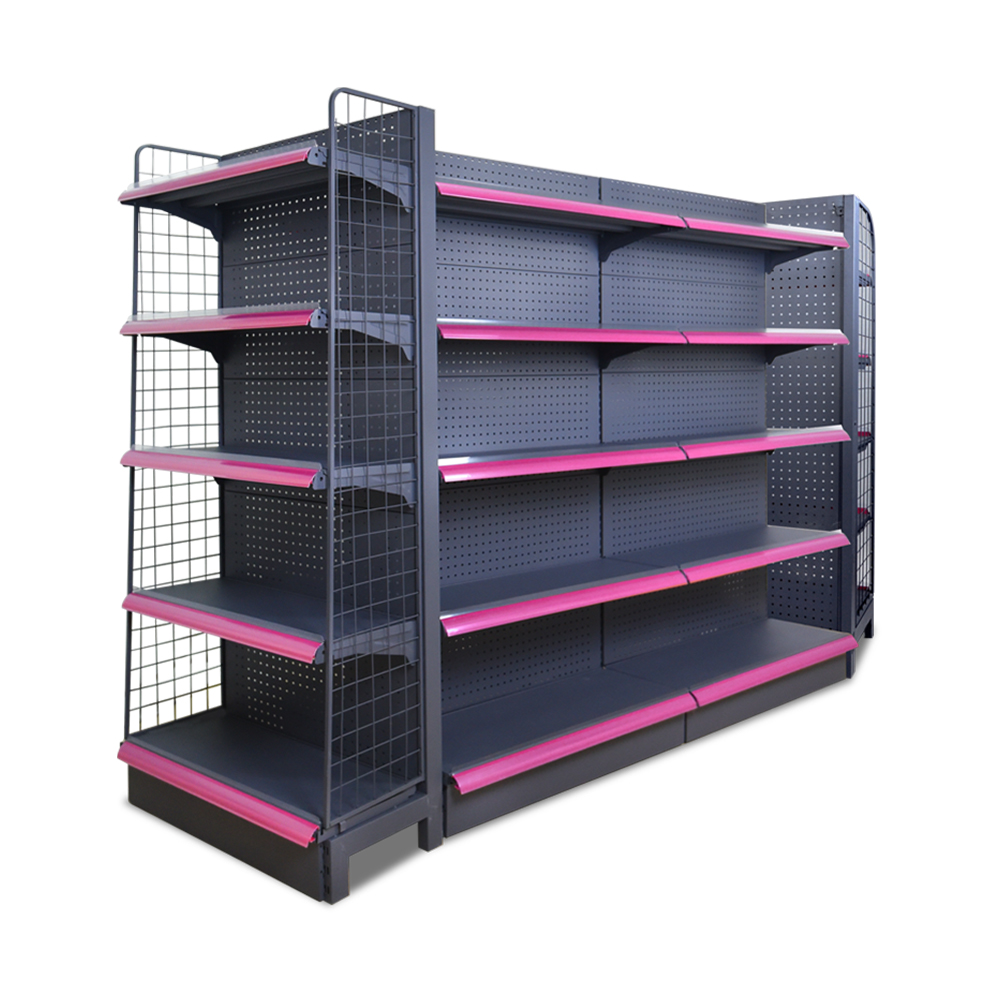
Retail racks are designed around merchandising. Grocery stores and convenience shops need modular units that can change from a flat shelf to a slanted display shelf within minutes. Supermarket shelving systems usually include base shelves, uprights with pigment-coated steel, and optional wire baskets for smaller items. The main technical requirement is adjustability: a shelf that can be moved at 25 mm intervals gives the merchandising team the freedom to adapt to different package sizes. Retail display racks also support a wide range of work: from bakery goods to canned food to small electronics. They must be easy to clean, resistant to scratches, and visually consistent so the final store looks organized.
For a retail operator, the purchase decision is not only about the rack itself. It also involves the checkout counter, the shopping baskets, and the display fixtures that define the overall customer journey. A complete store rack solution includes the shelving, the backroom storage racks, and the front-end checkout area. Buying from a manufacturer that can supply the full set of supermarket fixtures reduces coordination work and ensures a uniform look and finish.
Industrial and Warehouse Store Racks
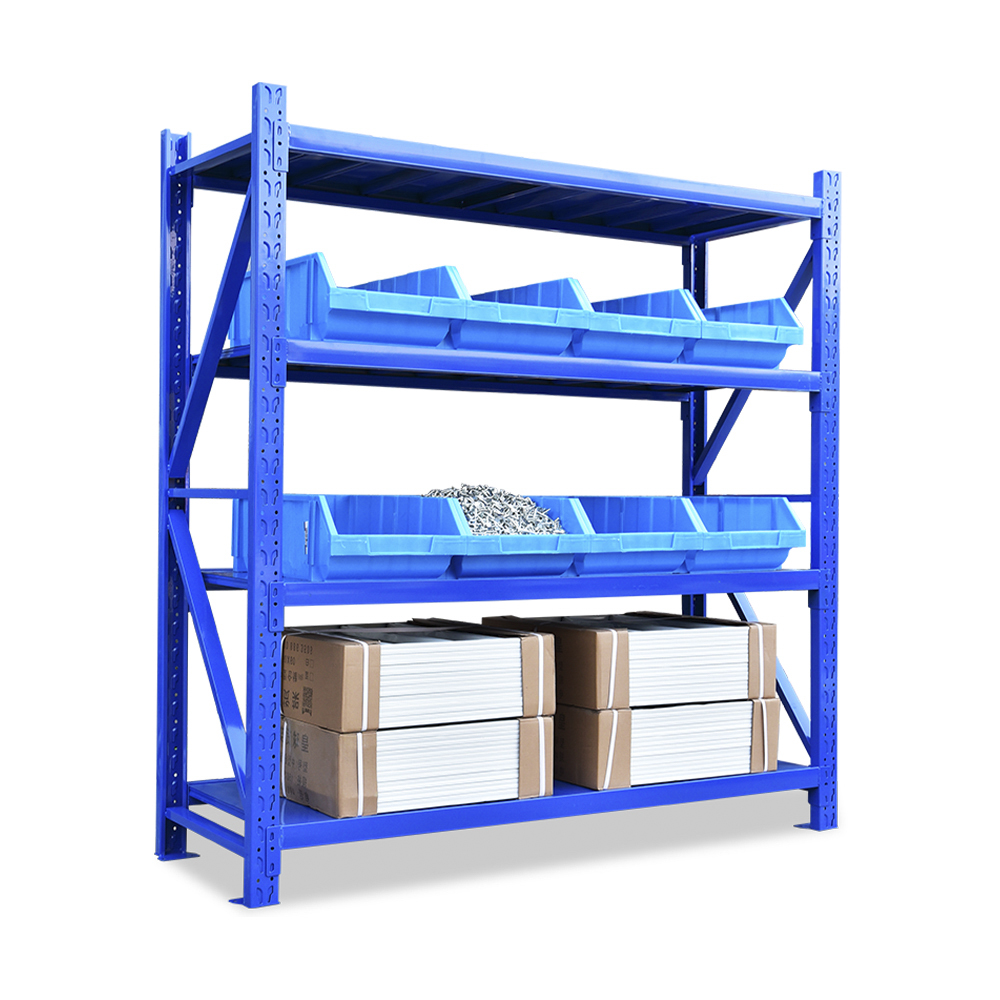
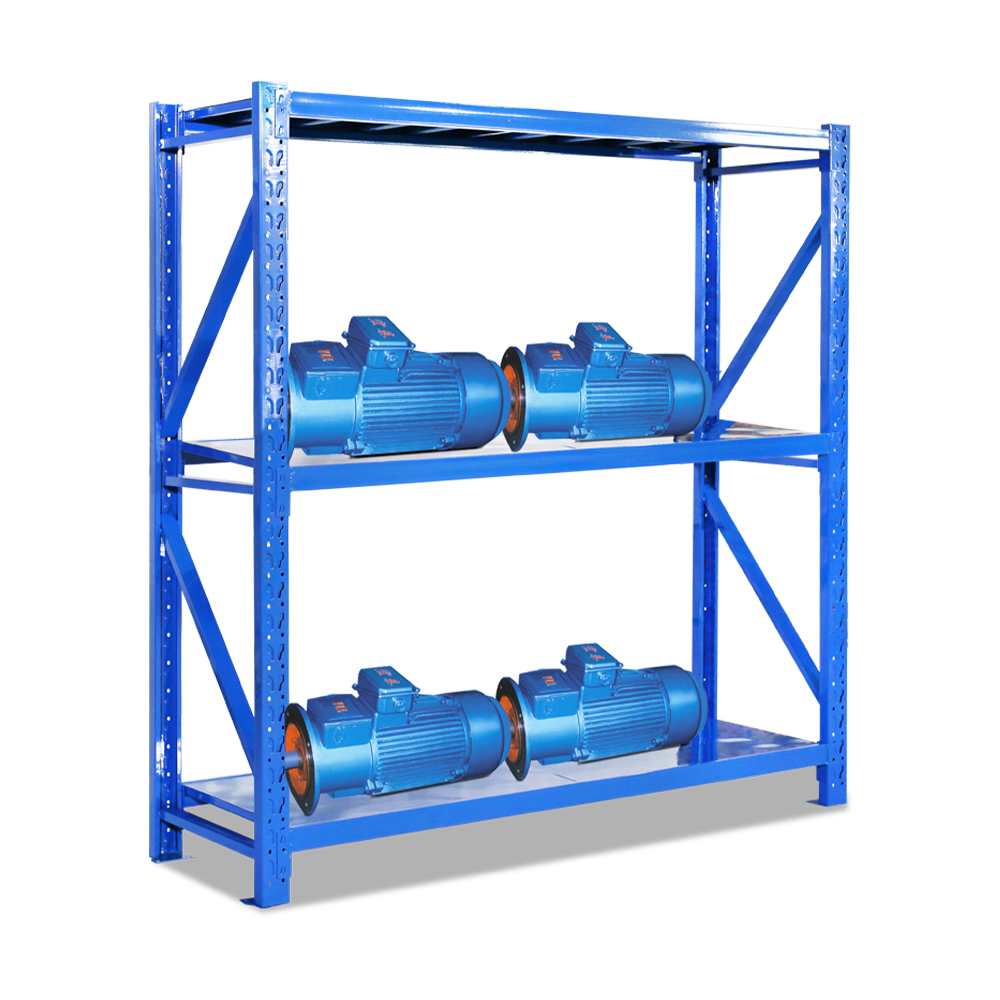
Warehouse racks are the backbone of a distribution center. The main families include light-duty, medium-duty, heavy-duty, pallet racking, cantilever racks, and mezzanine floor racking systems. Light-duty racks are used for smaller cartons and manual picking. Medium-duty racks, often with corrosion protection, are common in factory backrooms and maintenance storage. Heavy-duty steel storage racks carry bulk loads and are used with hand trucks or forklifts. Pallet racking is specifically designed for stackable pallets, allowing you to store up to four or five pallets high. Cantilever racks solve the problem of long or irregular items such as pipes, lumber, or furniture panels.
The difference between a light-duty warehouse rack and a heavy-duty rack is not just a thicker beam. The geometry of the upright, the shape of the beam connection, and the strength of the footing all change. A light-duty unit may hold 100 kg per level, while a heavy-duty rack can hold 500 kg or more per level with the same footprint. That is why industrial buyers must know the maximum weight per level, not the total weight per bay. In many real projects, the rack bays are installed on concrete floors with different load-bearing capacities, and the floor condition affects the final safe working load of the rack system.
Office and Home Storage Racks
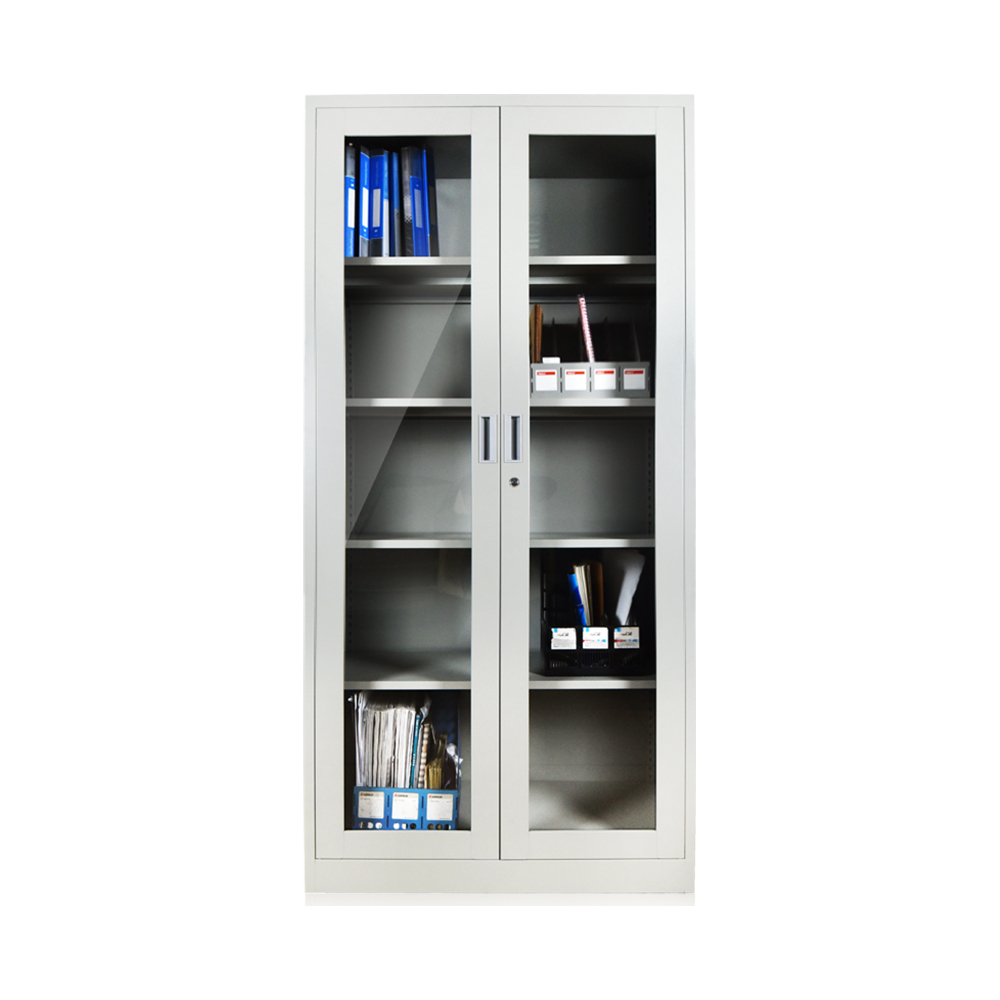
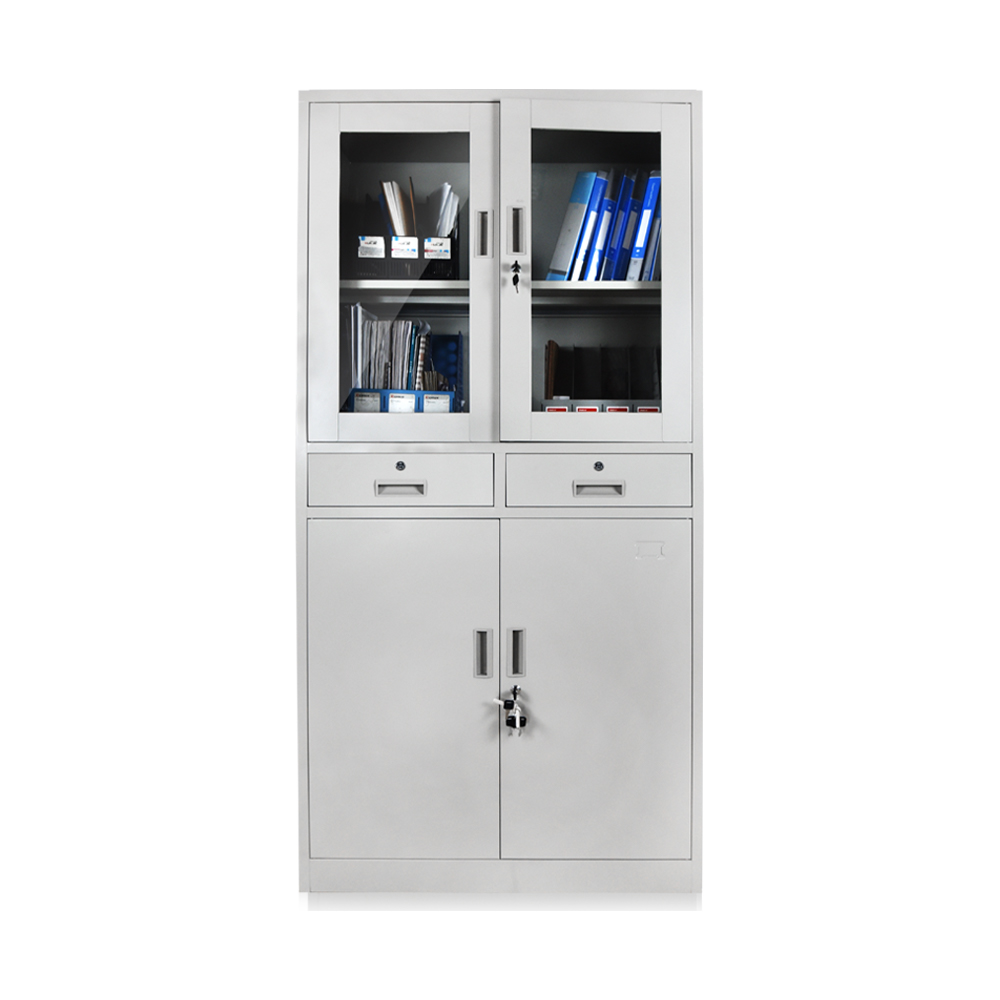
Office and home racks prioritize compactness and flexibility. File cabinets and lockable metal storage cabinets protect documents and keep them organized. Foldable storage shelves are popular for home use because they can be assembled and disassembled quickly, especially during moves or seasonal changes. Adjustable metal storage racks are the standard solution for garages, basements, and utility rooms, and they are often the first product people buy when they decide to clear out a closet or organize a pantry. These racks are usually made of lighter steel and often feature a powder-coated finish that resists scratches and moisture.
The right store rack family depends on the dominant load type and the physical environment: retail needs adaptability, warehouse needs strength, and office or home needs flexibility and easy maintenance.
Load Capacity Comparison: A Quick Reference for Buyers
Choosing the right store rack starts with understanding load capacity, because every rack type works in a different weight range. In real purchasing decisions, the difference between a light-duty rack and a heavy-duty rack is not a matter of style but of safety and budget. Warehouse managers typically ask two questions first: how much weight per level, and how tall can the system go. Retail buyers, on the other hand, focus on how the rack holds a full shelf of merchandise and how easily staff can restock. To make these choices less abstract, the chart below compares typical load ratings across common store rack families.
The chart shows a clear tiered pattern in store rack capacity. Light-duty racks generally support 50 to 150 kg per level, which is enough for cartons, documents, and smaller packaged goods, but not for bulk pallets. Medium-duty racks sit in the 200 to 500 kg band, covering most factory backroom applications and maintenance stores. Heavy-duty racks run from 500 kg to more than 1,000 kg per level, and they are normally paired with handling equipment. Pallet racking stands out as the highest-capacity family, usually between 1,000 and 3,500 kg per level depending on beam length and frame strength. Cantilever racks are a little different because their capacity is measured per arm, and they handle a narrower range of items: pipes, boards, furniture, and similar long loads. The real insight for buyers is that load rating is not the only number that matters. It must be matched with shelf length and beam spacing. For example, a 500 kg rating on a 1.5 m beam is not the same as a 500 kg rating on a 2.4 m beam, because the longer beam deflects more under the same load. That is why procurement teams should look at the entire shelf configuration rather than a single figure. Many suppliers mark racks using maximum static load, but actual working load can differ under dynamic conditions such as forklift movement or uneven floor positioning. A practical rule is to choose one rack family above your estimated need, which gives a safety buffer without inflating cost too much. In our experience, consistent quality in the steel gauge and surface treatment matters more than advertising a higher maximum figure.
Quick comparison of common store rack types and their typical specifications
Rack Type
Load Range
Typical Use
Adjustability
Light-duty
50-150 kg/level
Office, retail, small parts
High
Medium-duty
200-500 kg/level
Factory storage, workshop
Medium
Heavy-duty
500-1,000 kg/level
Industrial warehouse, bulk goods
Medium
Pallet rack
1,000-3,500 kg/level
Palletized storage, logistics center
Low to medium
Cantilever
500-3,000 kg/arm
Long or irregular items
Medium
Always compare store racks using the load per level combined with beam length, because a high number on a short beam is not the same as a high number on a long beam.
How to Choose the Right Store Racks for Your Project
A good rack selection process is a sequence of practical decisions. The first step is to measure the available space: the distance between columns, the width of the walkway or aisle, and the clear height under the ceiling. The second step is to calculate the load. For each level, you need the maximum weight of the items that will sit on it. In a supermarket this means cartons and crates; in a warehouse it means pallets; in an office it means files and equipment. The third step is to select the rack family that fits both the space and the load. A light-duty rack with a 150 kg capacity cannot be used for a full pallet of bottled water, no matter how attractive the price is.
Measure the real space, including obstacles. Never work from a floor plan without verifying walls, pipes, ventilation ducts, and column positions on site.
Define the maximum load per level. Multiply the heaviest single item by the number of items you plan to put on one level. Add a 15 to 25 percent safety margin.
Choose the rack family and finish. Match light, medium, or heavy duty to the load. For humid environments, select powder-coated or stainless steel options with anti-rust treatment.
Plan for extension. Decide whether you will add more bays, more levels, or a walkway above the rack later. A modular design allows future additions.
Confirm installation conditions. Check the floor flatness, the anchor method, and whether the rack will be freestanding or bolted to the floor. This affects overall safety.
For many importers and wholesalers, the decision is also about the supplier. A manufacturer that can customize bay widths and heights to match your exact container loading plan will reduce waste and cut freight costs. A strict quality check on welding, surface treatment, and connection tolerances is a realistic advantage when you receive a full container of racking.
When buyers compare factory quotes, they should ask for the beam span, the upright thickness, and the surface treatment standard. These details matter more than the total price quoted per bay because they determine how long the system will last and how safe it will be under daily use.
A reliable store rack purchase starts with real floor measurements and a realistic load calculation, then moves to the manufacturer that can match the specification with good quality control.
What to Avoid When Buying Store Racks
The most common mistake in store rack selection is making the decision based only on price per unit. In a classic scenario, a buyer chooses the cheapest rack that seems to match the desired dimensions, only to find that the uprights are thinner, the beams are shallower, and the whole system bends when fully loaded. The second mistake is ignoring the connection quality. A beam that slides into an upright without a positive safety lock becomes dangerous when people forget to re-insert the beam after changing shelf height. Third, many buyers forget to check the floor. Store racks are only as strong as the surface under them. On an uneven concrete floor, a rack can tilt, and a slight lean increases stress on the frames.
Do not buy racks without a load plan. Calculate the maximum weight per level before you order anything.
Do not ignore corrosion protection in humid climates. Coastal or tropical zones demand powder-coated or galvanized finishes.
Do not assume the rack fits through your door. Check the width of your entry, elevator, and stairwell before specifying the upright height.
Do not forget safety accessories. Beam locks, foot protectors, and anti-slip inserts are small parts that prevent big accidents.
Do not skip the supplier capacity check. Ask whether the manufacturer can deliver the same finish and color across a large order.
Another common issue is overbuying. A buyer selects heavy-duty racks for a storage area that only holds light cartons. The result is wasted budget and an unnecessarily heavy steel structure. The opposite is also common: a light-duty rack is used for heavy tooling, leading to bent beams and a potential safety issue. In both cases, careful specification work and a short conversation with a knowledgeable manufacturer would avoid the problem.
The cheapest store rack is expensive if it fails under load, while a slightly more expensive rack from a reliable manufacturer can save money in replacement costs and safety risks.
Maintenance Tips for Long-Term Performance
Store racks are built to last, but they still require a basic inspection routine. Steel is strong, but daily use creates small movements that can loosen bolts and shift footings over time. In any high-traffic warehouse, the most vulnerable parts are the base plates, the beam connections, and the vertical uprights near the floor. Damage in these areas is often visible before it becomes a serious problem.
Check all beam locks every month and replace any bent or missing locks immediately.
Inspect the uprights near the floor for dents, scrapes, or signs of corrosion.
Ensure that no rack level is loaded above its rated capacity. Train staff to respect the posted limits.
Clean the surface regularly to avoid dust buildup, which can trap moisture and accelerate rust on exposed edges.
Watch for loose base plates after heavy forklift traffic and re-anchor if necessary.
For racks used outdoors or in humid environments, check the coating for scratches and repair them early.
A good practice is to include rack inspection in the monthly safety walk-through. If a beam is visibly bent, it should not be loaded until it is replaced by the supplier. If the upright has a deep dent, the affected frame should be taken out of service. Many manufacturers also provide replacement parts, so it is worth storing a small quantity of spare beams and locks for emergency repairs.
Regular visual inspection and quick replacement of small components are the most cost-effective ways to keep a store rack system safe and productive for years.
Why Buy Store Racks from a Manufacturer
A manufacturer like Shanghai King Global Shelf Co., Ltd. brings different advantages compared to a trading company or a local reseller. The first advantage is direct control over quality. A manufacturer owns the production line, sets the steel gauge, controls the welding process, and confirms the surface treatment. The second advantage is flexibility. An importer or project company often needs custom solutions: a special bay width, a specific upright height, or a unique color. A manufacturer can adjust the dies, change the cutting length, or apply a custom powder-coating finish without involving multiple agencies. The third advantage is service depth. When you buy directly from a factory, you also get access to the engineering team who can answer questions about load capacity and installation before the order is placed.
Buying from a manufacturer also matters for wholesalers and distributors who need a stable supply chain. Wholesale rack orders are usually placed in full containers, and the supplier must maintain consistency across batches. A factory with a standardized manufacturing process can deliver the same rack design, same color, and same tolerance in every batch, which is critical when the racks will be installed in one store chain or one distribution center. For ODM or OEM projects, the manufacturer can add your branding or adjust the design to match your market requirements. This is a practical advantage for importers who want to build a local product line without investing in their own factory.
Working directly with a manufacturer gives importers and wholesalers better control over quality, customization, and supply consistency compared to buying through an intermediary.
Related Resources and Further Reading
If you need deeper selection criteria or want to see how store rack principles apply across industries, these two resources will give you a more technical view. The first one covers warehouse rack system selection in context, including layout and beam spacing. The second one introduces the different industrial environments where our storage solutions are used.
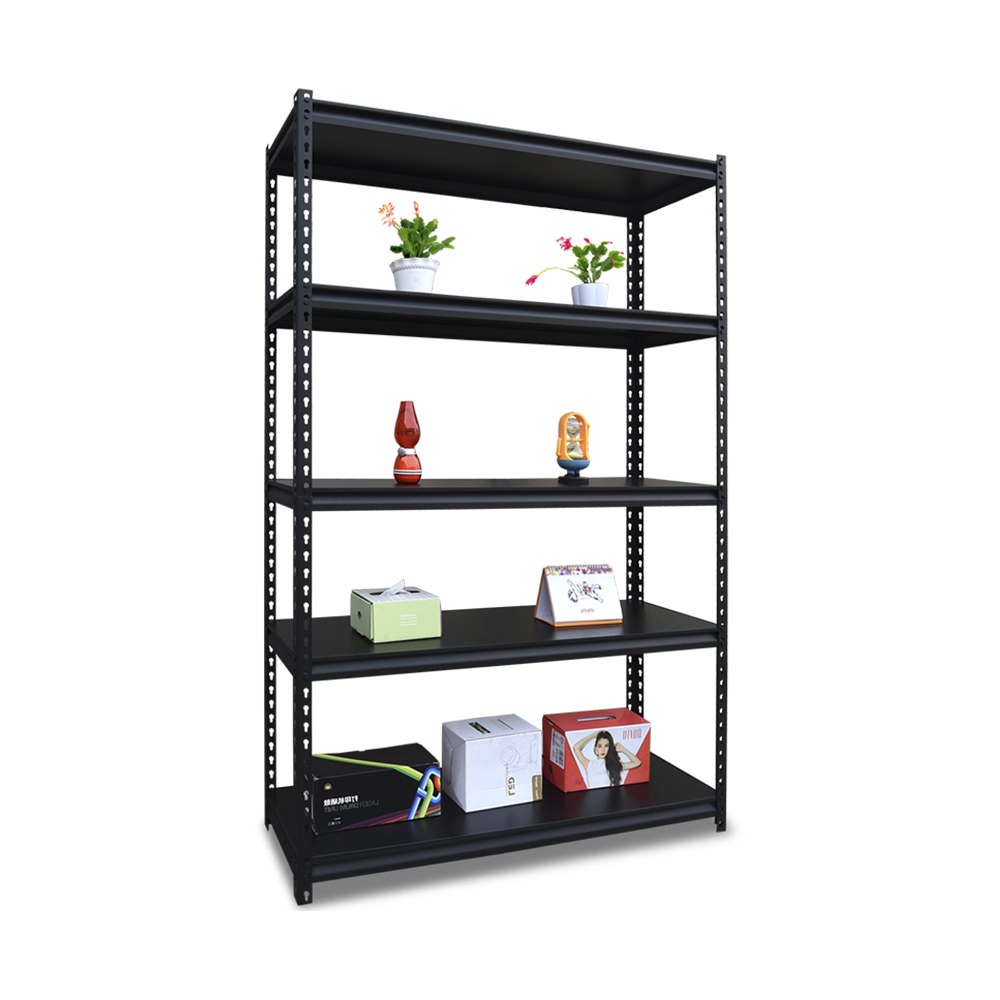
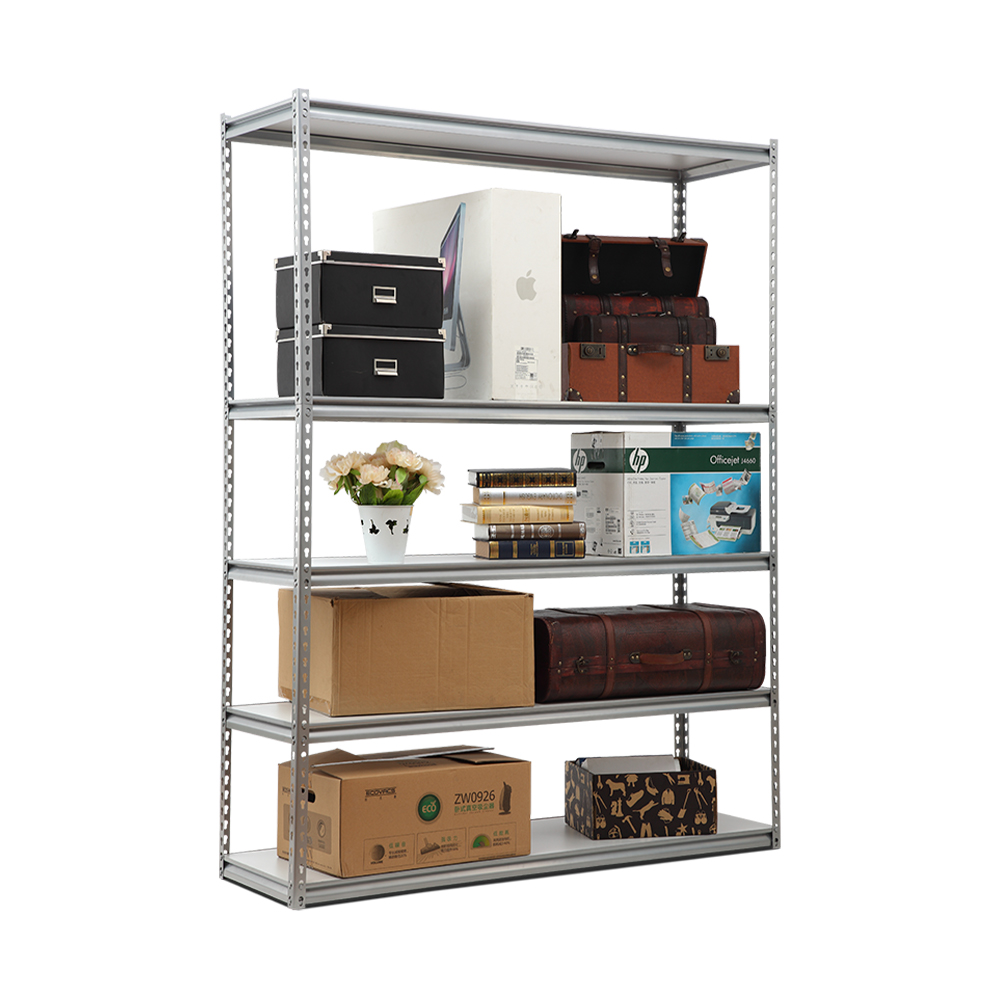
【Ideal para almacenamiento en garajes, sótanos y talleres】Este estante de almacenamiento de alta resistencia es la solución perfecta para organizar el garaje, el sótano, el taller o el cobertizo de su hogar, proporcionando un amplio almacenamiento de alta capacidad para todos sus artículos pesados.Ya sea que necesite almacenar herramientas eléctricas, equipos de jardinería, suministros automotrices, decoraciones de temporada, artículos para el hogar a granel o cualquier otra cosa, este estante puede manejarlo todo, ayudándolo a mantener su espacio organizado y libre de desorden.【Maximice el espacio de almacenamiento de su hogar】Este estante de almacenamiento vertical le permite aprovechar al máximo el espacio vertical de su hogar, aumentando significativamente su capacidad de almacenamiento sin ocupar espacio adicional en el piso.Es ideal para pequeños garajes, sótanos y talleres, donde el espacio es limitado, ayudándote a mantener tu área organizada y tu espacio libre para otras actividades.【Almacenamiento seguro y protegido para artículos pesados】La estructura de acero reforzado y el diseño estable garantizan que sus artículos pesados y valiosos se almacenen de forma segura, con un riesgo mínimo de que el estante colapse o los artículos se caigan.Esto le brinda tranquilidad, sabiendo que sus costosas herramientas, equipos y artículos para el hogar están bien protegidos y almacenados de manera segura y organizada.【Inversión duradera para su hogar】Fabricado en acero de alta calidad con un acabado antioxidante duradero, este estante está diseñado para durar muchos años, incluso con un uso diario intensivo en entornos domésticos hostiles.Es una inversión única que seguirá satisfaciendo sus necesidades de almacenamiento durante los próximos años, ahorrándole el costo de reemplazar soluciones de almacenamiento baratas y endebles que se rompen fácilmente.【Versátil para múltiples aplicaciones domésticas】Este estante se puede utilizar en una amplia variedad de entornos domésticos, desde el garaje, el sótano y el taller hasta la sala de estar, el dormitorio, la cocina e incluso las áreas de almacenamiento al aire libre.Su alta capacidad de carga, diseño ajustable y construcción duradera lo hacen adecuado para casi cualquier aplicación de almacenamiento doméstico, tanto en interiores como en exteriores.
【Estante de almacenamiento doméstico de alta capacidad y alta resistencia】Este estante de almacenamiento de alta resistencia está diseñado para uso doméstico y cuenta con una capacidad de carga excepcional, lo que lo hace ideal para almacenar artículos pesados como herramientas, equipos, suministros a granel, electrodomésticos y más.La estructura de acero reforzado garantiza que el estante permanezca estable y seguro, incluso cuando está completamente cargado con los artículos más pesados, lo que proporciona una solución de almacenamiento confiable y duradera para su hogar.【Construcción de acero reforzado para mayor durabilidad】Construido con acero laminado en frío de alta calidad, este estante de almacenamiento ofrece resistencia, durabilidad y resistencia superiores a la flexión y la deformación, lo que lo hace adecuado para uso doméstico pesado.Las vigas reforzadas y los montantes forman una estructura de soporte sólida, lo que garantiza que el estante permanezca rígido y libre de oscilaciones, incluso cuando se almacenan artículos pesados en las capas superiores.【Altura de estante ajustable para almacenamiento personalizado】Los estantes de este estante se pueden ajustar fácilmente a diferentes alturas, lo que le permite personalizar el espacio de almacenamiento para que quepan artículos de varios tamaños, desde pequeñas cajas y herramientas hasta grandes electrodomésticos y muebles.Este diseño flexible garantiza que puedas aprovechar al máximo el espacio vertical, adaptándote a tus cambiantes necesidades de almacenamiento en cualquier momento.【Fácil de montar e instalar】Este estante de almacenamiento viene con todo el hardware necesario y un manual de instalación detallado, lo que hace que el montaje sea rápido y sin complicaciones.El innovador diseño sin pernos permite un fácil montaje sin necesidad de herramientas complicadas, y una persona puede completar la instalación en poco tiempo, ahorrándole tiempo y esfuerzo.【Acabado resistente al óxido y duradero】Todo el estante está tratado con un acabado de recubrimiento en polvo de primera calidad, que proporciona una excelente resistencia al óxido, la corrosión y los rayones, lo que lo hace adecuado para su uso en garajes, sótanos, talleres y otros entornos domésticos húmedos o hostiles.Este acabado prolonga la vida útil del rack, garantizando que permanezca en buen estado durante muchos años, incluso con un uso diario intenso.
【Mantenga su hogar organizado y libre de desorden】Este estante de almacenamiento doméstico liviano es la solución perfecta para organizar su hogar y mantenerlo libre de desorden.Con sus estantes ajustables y su diseño multicapa, proporciona un amplio espacio de almacenamiento para todos los artículos de su hogar, ayudándole a clasificar y organizar todo de forma ordenada, lo que le permite encontrar fácilmente lo que necesita, cuando lo necesita.【Ideal para vivir en casas y apartamentos pequeños】Si vive en un apartamento pequeño, estudio o condominio con espacio de almacenamiento limitado, este estante de almacenamiento compacto es la alternativa perfecta a los muebles voluminosos que consumen mucho espacio.Ocupa un espacio mínimo y maximiza su capacidad de almacenamiento vertical, lo que le permite mantener todos sus artículos organizados sin abarrotar su espacio habitable.【Uso y mantenimiento diarios sin complicaciones】La suave superficie antioxidante de este estante es fácil de limpiar y mantener, simplemente límpielo con un paño húmedo para eliminar el polvo y la suciedad, y lucirá como nuevo durante años.La estructura estable y los bordes redondeados garantizan un uso diario seguro, evitando golpes y lesiones accidentales, especialmente para familias con niños y mascotas.【Almacenamiento flexible para necesidades cambiantes del hogar】A medida que sus necesidades de almacenamiento cambian con el tiempo, este estante ajustable se puede reconfigurar fácilmente para adaptarse a artículos nuevos, desde ropa de temporada y electrodomésticos nuevos hasta juguetes para niños y equipos deportivos.No necesita comprar muebles de almacenamiento nuevos cada vez que sus necesidades cambian, este estante puede crecer con usted y su familia, adaptándose a su estilo de vida cambiante.【Solución de almacenamiento en el hogar asequible y confiable】Fabricado con materiales de alta calidad con un acabado antioxidante duradero, este estante de almacenamiento está diseñado para durar muchos años, proporcionando una solución de almacenamiento confiable y a largo plazo para su hogar.Se ofrece a un precio asequible, lo que lo convierte en una alternativa rentable a los muebles de almacenamiento más caros y una gran inversión para cualquier propietario que busque organizar su espacio.
【Estante de almacenamiento para el hogar ajustable y liviano】Este estante de almacenamiento liviano está diseñado específicamente para uso doméstico y cuenta con una altura de estante ajustable, lo que facilita personalizar el estante para adaptarlo a sus necesidades de almacenamiento específicas.Ya sea que necesite guardar libros, ropa, artículos para el hogar, utensilios de cocina u otros artículos, este estante flexible se puede adaptar para acomodar artículos de todos los tamaños, ayudándole a mantener su hogar organizado.【Diseño de montaje rápido sin herramientas】Este estante de almacenamiento presenta un innovador diseño de ensamblaje sin herramientas, lo que le permite ensamblar el estante de manera rápida y sencilla sin herramientas complicadas ni ayuda profesional.Se incluye todo el hardware necesario y un manual de instalación detallado, y una persona puede completar el montaje en poco tiempo, ahorrándole tiempo y esfuerzo.【Construcción resistente al óxido y duradera】Construido con acero de alta calidad con un revestimiento antioxidante de primera calidad, este estante de almacenamiento ofrece una durabilidad y resistencia a la corrosión excepcionales, lo que lo hace adecuado para su uso en ambientes húmedos como cocinas, baños y balcones.La estructura reforzada garantiza que el estante permanezca estable y seguro, incluso cuando está completamente cargado, proporcionando una solución de almacenamiento confiable y duradera para su hogar.【Adaptable en múltiples escenas para uso doméstico】Este versátil estante de almacenamiento es perfecto para usar en todas las habitaciones de su hogar, desde la sala de estar, el dormitorio y el estudio hasta la cocina, el baño, el balcón y el garaje.Se puede utilizar para organizar libros en el estudio, ropa en el dormitorio, utensilios de cocina en la cocina, artículos de tocador en el baño, herramientas en el garaje y mucho más, lo que lo convierte en una solución de almacenamiento en el hogar verdaderamente todo en uno.【Diseño de almacenamiento vertical que ahorra espacio】Este estante de almacenamiento vertical aprovecha al máximo el espacio vertical de su hogar, lo que le permite almacenar más artículos sin ocupar espacio adicional en el piso.Es ideal para apartamentos pequeños, estudios y condominios, donde cada centímetro de espacio es precioso, lo que le ayuda a mantener su hogar ordenado y libre de desorden, al mismo tiempo que proporciona una amplia capacidad de almacenamiento.
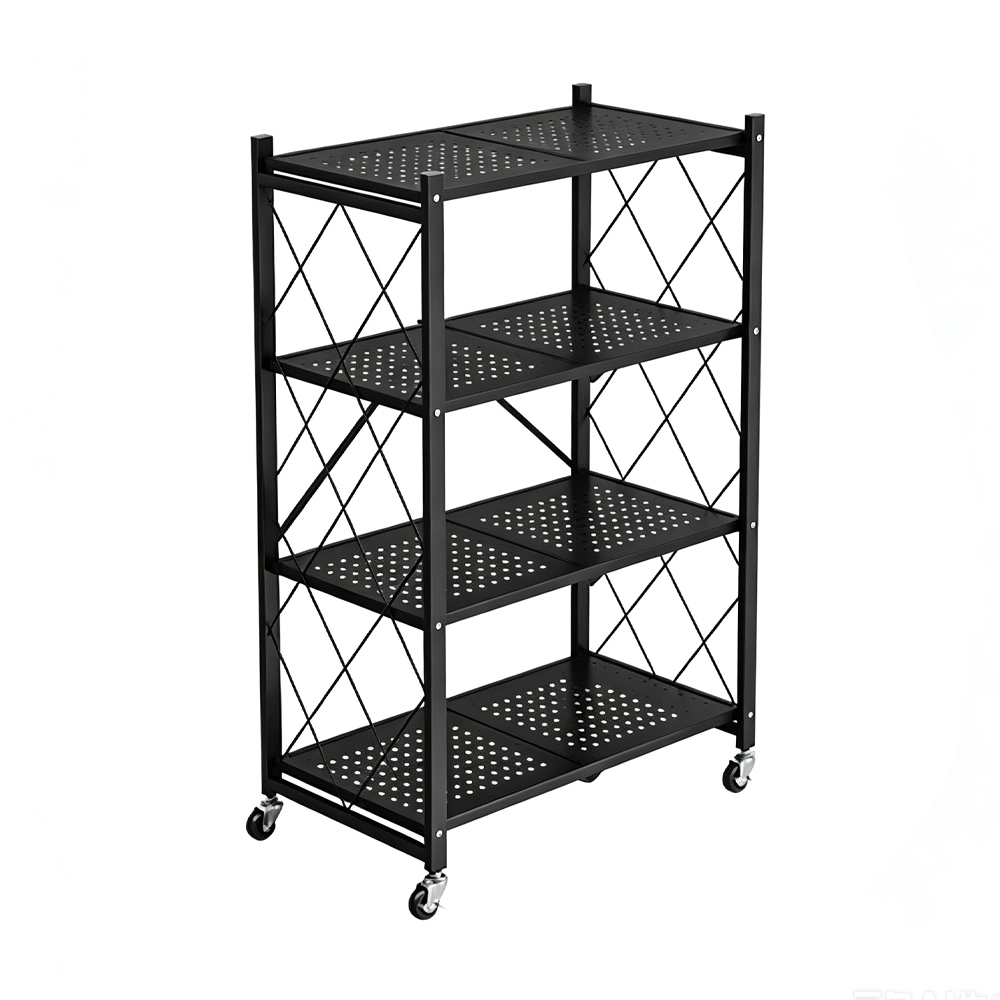
【Solución de almacenamiento perfecta para espacios habitables pequeños】Si vive en un apartamento pequeño, estudio o condominio con espacio limitado, este estante de almacenamiento plegable es la solución perfecta para todas sus necesidades de almacenamiento.Proporciona un amplio almacenamiento multicapa cuando lo necesita y se pliega de forma compacta cuando no lo necesita, lo que le ahorra un valioso espacio en el piso y le ayuda a mantener su hogar organizado y libre de desorden.【Ideal para almacenamiento temporal y estacional】Este estante plegable es perfecto para necesidades de almacenamiento temporales y estacionales, como guardar ropa de temporada, decoraciones navideñas, equipos deportivos y otros artículos que no usas durante todo el año.Cuando no esté en uso, puedes simplemente plegarlo y guardarlo en un armario, debajo de la cama o en el garaje, ocupando un espacio mínimo hasta que lo necesites nuevamente.【Fácil de montar y utilizar】Este estante de almacenamiento viene preensamblado o requiere un ensamblaje mínimo, lo que hace que sea rápido y fácil de configurar y comenzar a usar de inmediato.El diseño plegable simple significa que puedes desplegarlo y tenerlo listo para usar en segundos, sin necesidad de herramientas o instrucciones complicadas.【Estable y seguro para uso diario en el hogar】La estructura reforzada y el diseño antideslizante garantizan que este estante de almacenamiento permanezca estable y seguro durante el uso diario, con un riesgo mínimo de tambalearse, volcarse o colapsar.Esto hace que sea seguro usarlo en hogares con niños y mascotas, lo que le brinda la tranquilidad de que sus artículos se almacenan de forma segura.【Versátil para múltiples aplicaciones en el hogar】Este estante de almacenamiento plegable se puede utilizar en todas las habitaciones de su hogar, desde la sala de estar, el dormitorio y la cocina hasta el baño, el garaje y el balcón.Es perfecto para organizar libros, juguetes, ropa, utensilios de cocina, artículos de tocador, herramientas y más, lo que lo convierte en una solución de almacenamiento todo en uno verdaderamente versátil y práctica para su hogar.



 English
  Español
  русский
  Français
  한국어
한국어  عربى
عربى  ไทย
ไทย  Deutsch
  Bahasa Melayu
  Português
  Polskie